

What is the elasticity of a copper bar?
In the world of materials science and engineering, understanding the properties of different materials is crucial for various applications. As a trusted supplier of copper bars, I am often asked about the elasticity of copper bars. In this blog post, I will delve into the concept of elasticity in copper bars, its significance, and how it impacts different industries.

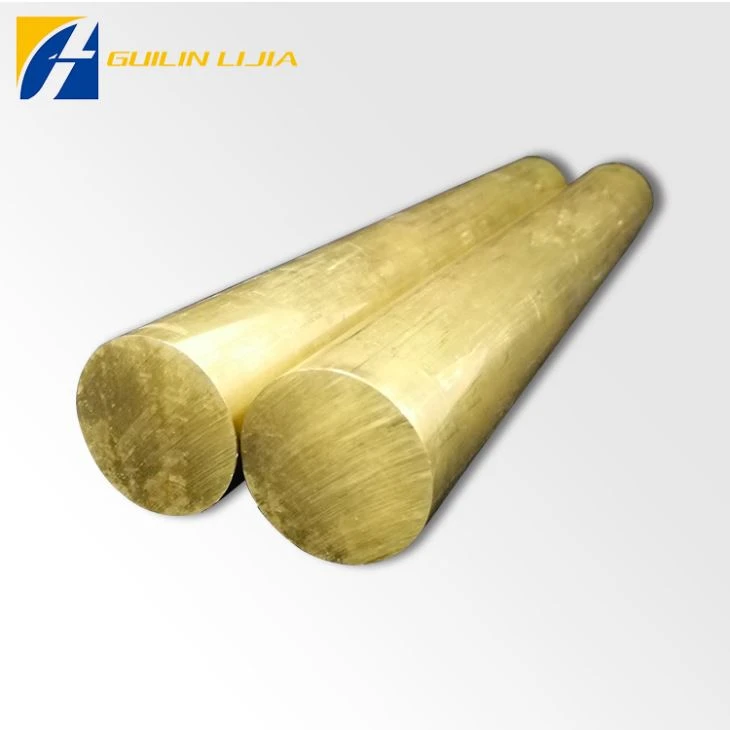
Elasticity is a fundamental property of materials that describes their ability to deform under stress and return to their original shape when the stress is removed. When a force is applied to a copper bar, it causes the bar to stretch or compress. As long as the applied stress is within the elastic limit of the copper, the bar will revert to its original shape once the force is no longer applied. This behavior is governed by Hooke's Law, which states that the force required to stretch or compress an elastic material is directly proportional to the displacement of the material.
Mathematically, Hooke's Law is expressed as F = kx, where F is the force applied, x is the displacement, and k is the spring constant, which represents the stiffness of the material. For a copper bar, the spring constant is related to its elastic modulus, also known as Young's modulus.
Young's modulus (E) is a measure of the stiffness of a material and is defined as the ratio of stress (σ) to strain (ε) within the elastic region. Stress is the force per unit area applied to the material, and strain is the relative change in length of the material. The formula for Young's modulus is E = σ/ε.
For copper, the value of Young's modulus typically ranges from about 110 - 128 GPa (gigapascals) depending on the specific alloy and the processing conditions. This relatively high value of Young's modulus indicates that copper is a fairly stiff material and requires a significant amount of force to produce a given amount of deformation within its elastic range.
The elasticity of copper bars is essential in many industrial applications. One of the key sectors that benefit from the elastic properties of copper is the electrical and electronics industry. Copper is an excellent conductor of electricity, and its ability to return to its original shape after being deformed makes it ideal for use in electrical connectors, switches, and springs. In these applications, copper bars can be bent or shaped to fit specific designs without losing their conductivity or mechanical integrity. For example, Copper Nickel Bar with High Resistance is used in electrical applications where both electrical conductivity and moderate resistance are required.
In the plumbing and construction industries, copper bars are used for pipes, fittings, and structural components. The elasticity of copper allows these components to withstand bending and stress during installation and use without breaking or leaking. For instance, Brass Bar for Fittings is widely used in plumbing systems, where its elastic properties ensure a secure and long - lasting connection between pipes.
Copper bars are also favored in the manufacturing of precise instruments. The ability of copper to maintain its shape within the elastic limit is crucial for applications where accuracy is paramount. Brass Bar for Precise Instrument is often used in these scenarios, as it provides the necessary stiffness and resilience for high - precision components.
In the automotive and aerospace industries, copper alloys are used in various parts such as heat exchangers, connectors, and springs. The elastic nature of copper bars helps these parts withstand vibrations, thermal cycling, and mechanical stresses during operation. Copper Alloy Round Bar is a popular choice for these applications due to its balanced combination of elasticity, strength, and corrosion resistance.
Several factors can affect the elasticity of copper bars. The first is the alloy composition. Pure copper has certain elastic properties, but when other elements such as zinc, tin, nickel, or phosphorus are added to form alloys, the elastic modulus and other mechanical properties can change significantly. For example, adding nickel to copper can increase its strength and corrosion resistance while also altering its elastic behavior.
The manufacturing process also plays a crucial role. Processes such as cold working, hot rolling, and annealing can modify the microstructure of the copper bar, which in turn affects its elasticity. Cold working, for instance, can increase the strength of the copper bar by introducing dislocations in the crystal structure, but it may also reduce its ductility and change its elastic response.
The temperature is another important factor. As the temperature of a copper bar increases, the atomic vibrations within the material become more energetic, which generally leads to a decrease in the elastic modulus. This means that at higher temperatures, the copper bar becomes more compliant and easier to deform.
When it comes to quality control and assurance of copper bars, measuring the elasticity is an important part of the process. This is typically done through tensile testing, where a sample of the copper bar is subjected to a gradually increasing tensile force until it either reaches its elastic limit or fails. During the test, the stress and strain are measured, and the elastic modulus can be calculated from the data obtained within the linear (elastic) region of the stress - strain curve.
In the market, there is a wide range of copper bars available to meet the diverse needs of different industries. As a supplier, we strive to provide high - quality copper bars with consistent elastic properties. Whether you need a bar for electrical applications, plumbing, or precision instruments, we have the right products for you.
If you are in need of copper bars for your project, we invite you to contact us for more information. Our team of experts can provide you with detailed technical specifications, assistance in selecting the right product for your application, and competitive pricing. We understand the importance of elasticity and other properties in your specific use cases, and we are committed to helping you make the best choice for your business.
In conclusion, the elasticity of copper bars is a vital property that influences their performance in a wide range of applications. Understanding the concept of elasticity, its measurement, and the factors that affect it is essential for engineers, designers, and manufacturers. As a leading supplier of copper bars, we are dedicated to providing products that meet the highest standards of quality and performance. If you have any questions or are interested in purchasing our copper bars, please feel free to reach out to us. We look forward to discussing your requirements and working with you on your next project.
References
- Callister, W. D., & Rethwisch, D. G. (2018). Materials Science and Engineering: An Introduction. Wiley.
- Ashby, M. F., & Jones, D. R. H. (2005). Engineering Materials 1: An Introduction to Properties, Applications and Design. Butterworth - Heinemann.
No Information