

Factory High Quality Plumbing Brass Pipe Fitting

Factory High Quality Plumbing Brass Pipe Fitting
Handrail brass tube for decoration is a kind of brass tube used for handrail for purpose of function and decoration. It is generally drawn by stage die and finished mould in sequence from round brass tube.
Features
Introduction of Handrail Brass Tube for Decoration
Handrail brass tube for decoration is a type of brass tube used for handrails, serving both functional and decorative purposes. It is generally drawn by stage die and finished mould in sequence from round brass tube. Guilin Lijia has produced these tubes for many years and has accumulated extensive production experience. We can customize according to the customer's specific drawings.
Advantages of Using Brass Tube in Decoration Projects
Increased durability
Brass is an alloy made by combining copper and zinc, making it a sturdy and durable material. Brass Tubes are resistant to wear, heat, and corrosion, making them an excellent choice for plumbing fixtures, architectural features, and other industrial applications. Also, brass can withstand high pressure and even be used in hydraulic systems.
Versatile applications
Brass tubes come in different sizes, shapes, and thicknesses and can be easily bent or shaped according to the project's requirements. They can be used for various purposes like air conditioning, refrigeration, and fire sprinkler systems, making them one of the most flexible materials to work with.
Energy efficient
Brass tubes can help reduce energy consumption, saving both money and resources. Brass tubes are known for their excellent heat conductivity, which helps minimise thermal loss and promote energy efficiency. They are used extensively in HVAC systems and heat exchangers, where heat transfer is essential.
Aesthetic appeal
Their distinct golden-yellow colour gives them a classic and elegant look, making them a popular choice for decorative purposes such as handrails, doorknobs, and light fixtures. Additionally, they can be polished, brushed, or given a patina finish, giving them a unique look that can enhance the overall appeal of the project.
High resistance to corrosion
Brass has natural corrosion-resistant properties, even in high-moisture environments, like coastal areas or industrial plants, brass tubes maintain their structural integrity and resist rust and corrosion, extending the project's lifespan.
Alloy And Production Standard
- C26000, C27000, C27200, C28000, C38500, C68700 (ASTM B111 or ASME SB111)
- CuZn30, CuZn36, CuZn37, CuZn40, CuZn39Pb3, CuZn20Al2As (EN12451 or EN12449 or DIN)
- CZ106, CZ107, CZ108, CZ109, CZ110 (BS British Standard)
- C2600, C2700, C2720, C2800, C3560, C6870 (JIS Japanese Industrial Standards)
Chemical composition
62.0≤Cu≤71.5 ; Zn Rem
Dimension/Size
Maximum outside diameter: 50.8mm
Maximum length: 4 meters
Properties of Brass Tubes
- Brass is used in Decorative Products becuase of antiques and ox finishes. In addition to its decorative appearance, brass offers other benefits worth noting. It has a higher malleability than both bronze and zinc, for instance, allowing metal workers to easily alter its shape and physical composition
- Brass is a great conductor of heat and is corrosion-resistant, especially to galvanic seawater corrosion. It casts well, is reasonably durable and attractive, and even possesses some antimicrobial qualities thanks to its high copper content.
Field Of Application
Handrail brass tube for decoration, as the name suggests, is a brass pipe used for decoration. As a rail providing stability and support, the material must have a glossy surface, abrasion resistance, and load-bearing capacity, and brass is the right material to meet these demands.
Decorative brass tube is primarily used in antique refurbishment or restoration projects, or vintage-style new build projects. A common application to supply to is traditional fairground carousels.
We are able to supply brass tube in a variety of decorative finishes, including:
- Barley Twist Brass Tube – also known as square twist
- Rope Twist Brass Tube – a traditional rope effect
- 6 Point Twisted Brass Tube – giving a 6 pointed star shaped profile
- Patterned Brass Tube – giving an embossed surface pattern
Finishes can be applied to round or reeded brass tube to reproduce a range of traditional antique or vintage finishes.


Proper Bending of Brass Tubing
Brass is a metal that's easy to work with. In its tube form, you can shape it to your heart's content and create specific furniture and fixture parts with it. Naturally, when you're working with brass tubes, the first thing you'll want to learn is how to bend it properly to achieve the shapes you want. Below is a step-by-step guide on how to bend brass tubes to achieve the best results.
The Tools
You're going to need machines that will help you bend the brass tubing. Your main tool will be a bender with the correct bending die. Dies come in various sizes, so it's important for you to know the right size of die for your needs. Other tools you're going to need include
metal cutting saw
funnel
sand
tube caps
welding equipment
Pre-Bending Steps
Before you start bending, you need to have the applicable bender die. This is absolutely critical to a good bend, because without the correct die, the tube will squish and be unusable. The die is supposed to hold the tube 180 degrees to prevent it from shrinking or stretching. If the die makes contact for only a fraction of that number, the result is an improper bend.
Your tube needs to be lengthier than what you need because you need to account for cutting and bend clearances. Longer is definitely better than shorter, because you can always cut a longer tube, but you can't add to a short one that's of insufficient size than what you need.
The Bending Process
Begin the bending process by welding a cap to one end of the tube, then start filling the tube with sand. Pound the tube on a solid flat object to make the sand settle. Keep filling and pounding the tube with sand to pack it tighter. Next, weld another cap on the open end of the tube. Once that's done, you're now ready to bend your tube on the die. If you have a drag style bender, keep the die oiled to prolong its usable life.
After bending your tube on the die, inspect the bend. If it's to your satisfaction, you may proceed to cut off the caps with your metal cutting saw then drain the sand into a container so you can reuse it.
Production Market
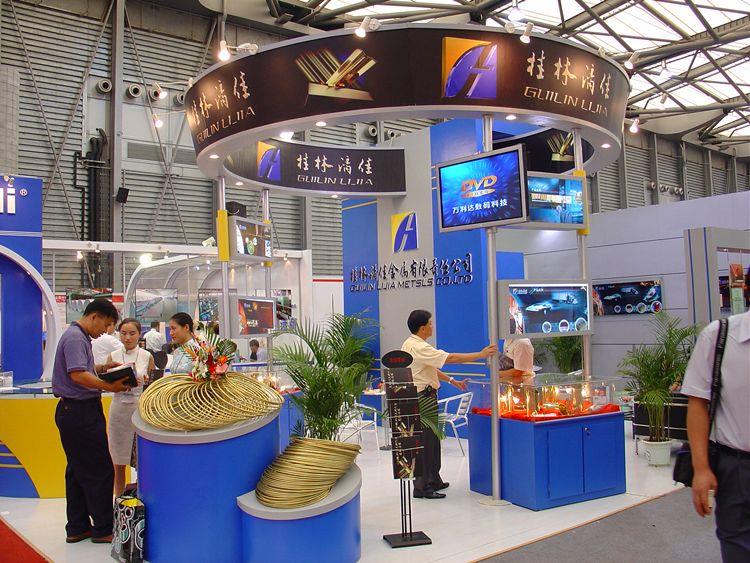
Guilin Lijia started its export business in 1998, and has since become an export-centered enterprise.
Our foreign markets are mainly distributed in the United States, Britain, Germany, France, Japan, Canada, the Netherlands, Australia, Italy, and other developed countries. Our company has established a long-term stable sales network in the international market and accumulated a wealth of international marketing experience. We are evaluated by foreign businessmen as the best enterprise providing international trade operations and service, enjoying a high reputation in the global market.
Domestically, our markets are mainly distributed in most provinces and regions in China, such as Guangdong, Zhejiang, Jiangsu, Heilongjiang, Shandong, Hubei, Shanxi, Liaoning, and the southwest.

Hot Tags: handrail brass tube for decoration, China handrail brass tube for decoration manufacturers, suppliers, factory, Seamless Brass Tube For Faucet, anti corrosion copper nickel, Brass Tube For Section, Ornamental Reeded Brass Tube, Heavy Wall Copper Tubing, Copper Tubing Coil
You Might Also Like


Send Inquiry