

Products

Copper Refrigeration Coil Pipe
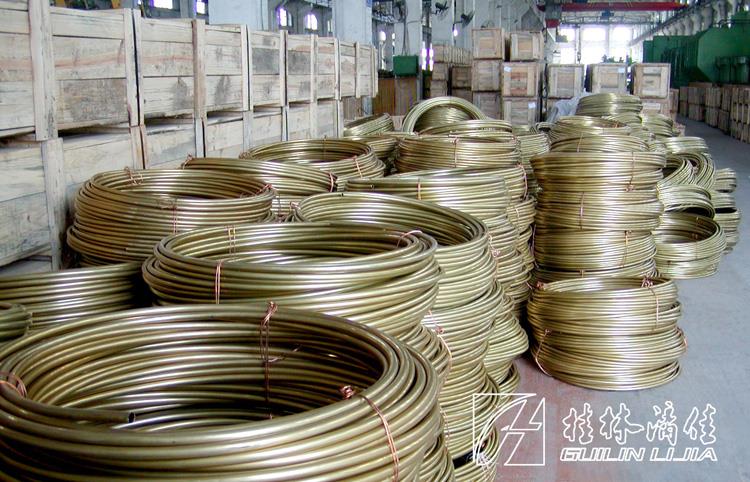
Copper refrigeration coil pipe is copper pipe in coil form used in refrigeration or thermoelectric coolers. Refrigeration is a process of removing heat from a low-temperature reservoir and transferring it to a high-temperature reservoir.
Features
Introduction of Copper Refrigeration Coil Pipe
Copper refrigeration coil pipe is copper pipe in coil form used in refrigeration or thermoelectric coolers. Refrigeration is a process of removing heat from a low-temperature reservoir and transferring it to a high-temperature reservoir. Copper pipe, with high thermal conductivity and corrosion resistance, is widely used as a refrigerant line in HVAC (heating ventilation air conditioning) systems.
Alloy and production standard
C70600 (ASTM B111 or ASME SB111)
CuNi10Fe1Mn (EN12451 or EN12449 or DIN)
CN102 (BS British Standard)
C7060 (JIS Japanese Industrial Standards)
Specifications
Copper Soft Coils 1/4" x 15m
Refrigeration quality copper tube
Conforms to PED and relevant EN British Standards
Suitable for R410a
22 gauge
Chemical composition
9.0≤Ni≤11.0 ; 1.0≤Fe≤1.8; Cu Rem
Dimension/size
Outside diameter range : 5mm~45mm
Wall thickness range : 0.3mm~4mm
Maximum weight: 45kg/coil
Properties of Copper Refrigeration Coil Pipe
Antimicrobial properties: Copper and its alloys, bronze, brass, and copper-nickel, all have natural antimicrobial properties which help keep water free of harmful bacteria.
Bendability: With the proper tools, bending copper pipe is a simple job. Each bend in a pipe system eliminates the need for an elbow to change the pipe's direction. Fewer elbows saves money and reduces the system's total number of failure points.
Softness: Compared to steel and cast iron, copper pipe is soft. This means copper pipe is easy to cut through to accomplish the needs of a project.
The Advantages of Copper Refrigeration Coil Pipe
Bacteriostatic property
Copper is bacteriostatic, that is, it combats the proliferation of bacteria on its surface. Now, in many American hospitals, door handles and banisters must be made of brass (a copper-zinc alloy) to prevent the transmission of diseases and proliferation of pathogenic bacteria. For instance, it has been found that the proliferation of Legionella is reduced when copper tubes are used. This property is already known in the nautical field: copper salts are added to many anti-fouling varnishes for ship keels in order to prevent the growth of algae and molluscs.
Copper is by far the best material against Legionella and other pathogenic bacteria, such as Escherichia Coli, Streptococcus Faecalis and Staphylococcus Aureus. Copper ions kill the micro-organisms that pathogenic agents feed on and reduce the growth of the biofilm, which tends to form a protective shield for bacteria. Its bacteriostatic property, together with other physico-chemical and economic characteristics, played a major role in the choice of copper alloys for the coinage of European Union coins.
Sustainability
Copper is an eco-friendly product, in the forefront as far as new design concepts are concerned, due to its extreme adaptability to manufacturing and installation innovations.
Conductivity
Copper has very high electrical and thermal conductivity, second only to silver. Due to its physical properties, it is used to make heat exchanging systems, such as heat exchangers, solar panels, and wall and floor-mounted radiating panels, more efficient. Alternative products, made up of several layers of different materials, do not have the same level of thermal conductivity and have different mechanical/chemical and flow characteristics for each layer, unlike copper which has a univocal, low thermal expansion coefficient.
Versatility
Copper is highly resistant to corrosion and is not magnetic; it is easy to work, extremely ductile and malleable and easy to recycle, as well as having a high scrap recovery rate. Its impermeability and resistance to ultraviolet rays and low temperatures, which means it can be installed in winter time without any risk of breakage, constitute further added value and give the product unique features thus guaranteeing maximum reliability.
Why Are Refrigerator Cooling Coils Made of Copper? What Role Does Copper Play?
The coolant flows through an evaporator made up of numerous thin wires, generally made of copper. The heat is absorbed by these wires, which run between the coolant pipes and are then dissipated.
Because copper is generally innocuous and has high ductility, it is ideal for evaporator tubes (it can be stretched, molded, and drawn into thin wires quickly). This means it can be soldered quickly at low temperatures and create tight seals. This is true in India for any deep freezer. The complete copper arrangement is used with low-melting-point compounds that have strong adhesion properties.
Copper has the unmistakable benefit of being a great thermal conductor. Compared to other conductors like aluminum, it also shows less internal material fatigue from cyclical temperature and pressure fluctuations.
Despite the fact that copper is more expensive than aluminum, it is considerably easier to fix. As a result, copper coils are stronger and more long-lasting.
On the subject of maintenance, it has been discovered that copper coils are preferable to steel coils in deep freezers in India, which must adjust to various climate conditions. Copper coils are also easier to clean and maintain. Unlike aluminum coils, which must be protected from harm by being housed inside a cabinet, copper coils may be maintained with minimal coverage.
Field of Application
Copper refrigeration coil pipe is generally used in refrigeration system, such as household refrigerators, industrial freezers, cryogenics, and air conditioning, which has a large impact on industry, lifestyle, agriculture, and settlement patterns.
Our Factory
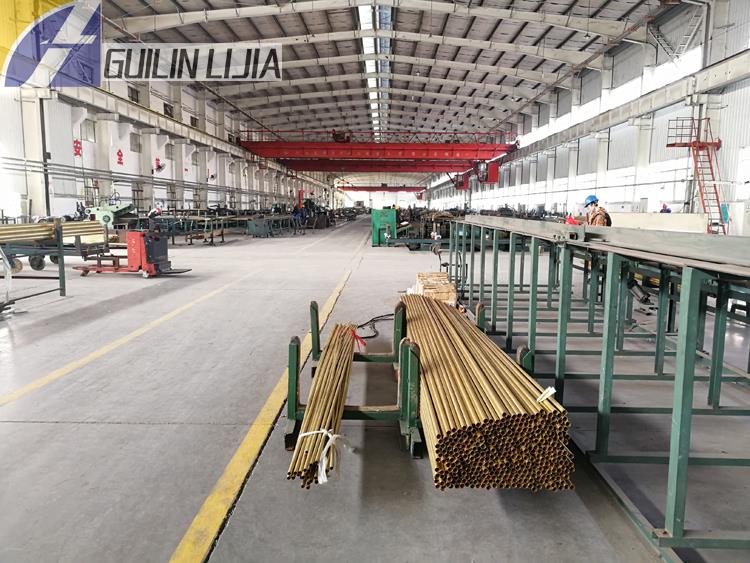
Guilin Lijia Metals Co., Ltd, established in 1976, is a key enterprise of copper fabrication in Guangxi, China. Total area of our company is 185,000 square meters, with production area 122,000 square meters,living area 63,000 square meters. Now there are 60% reserved industrial land which can be used for future extending.
Our company has 10 functional management departments and 2 production workshops with 515 employees including 150 professional technicians and 30 technical engineers with middle and high rank titles.


Hot Tags: copper refrigeration coil pipe, China copper refrigeration coil pipe manufacturers, suppliers, factory, Copper Refrigeration Tubing Coil, Cupro Nickel Coil Tube, Copper Pipe, Copper Refrigeration Coil Pipe
No Information
You Might Also Like


Send Inquiry
